

A denial rate can look precise while leaving the most important questions unanswered. Does the report count claims or claim lines? Initial denials or every denial response? Dollars or encounters? Until those definitions are clear, two percentages may describe entirely different things.
For physician owners, the objective is to identify where payment is being interrupted and whether the responsible team is resolving the cause.
Choose a definition before calculating the rate
One useful count-based measure is a first-adjudication denial rate. Define a cohort of unique claims receiving their first payer adjudication during the period. Then calculate:
First-adjudication denial rate = unique claims with a denial on first adjudication ÷ unique claims first adjudicated in the same period × 100.
Under a documented rule that counts any denied line as a denied claim, 60 affected claims out of 1,000 first-adjudicated claims produce a 6% rate. These are fictional figures. This definition is a proposed reporting convention, not a universal industry standard.
State how partial denials, reversals, secondary claims, and duplicate remittances are handled. If your system uses another definition, document it and keep the comparison consistent. A claim-line rate or dollar-based rate can also be useful, but label it separately.
Do not divide this month's denied claims by this month's submitted claims without acknowledging that the groups may differ. Many submissions have not yet received a response. A cohort-based approach helps keep the numerator and denominator aligned.
A denial is not the same as a final loss
A denied claim may later be corrected, appealed, paid, or written off. The initial denial rate measures an interruption; it does not establish how much revenue the practice ultimately loses.
Keep several stages visible: the initial issue, the amount still unresolved, subsequent payments, and final write-offs. Avoid adding these together as separate opportunities when they describe the same balances at different times.
HFMA's denial-metrics guidance addresses the need for consistent measurement, including distinctions between remittance denials and denial write-offs. Use published definitions when benchmarking, rather than assuming your local report matches them.
Keep rejected submissions separate
A claim rejected before payer adjudication belongs in a separate submission-quality view. Mixing those rejections with adjudicated denials can obscure where the workflow broke down and can count the same claim more than once.
Track the route from initial submission through acceptance, adjudication, correction, and payment. This helps leadership distinguish a front-end transmission problem from a payer's response to an accepted claim.
Move from the percentage to the underlying records
Break the result down by payer, reason category, service, and workflow when the data support those distinctions. Review both frequency and financial exposure. A high-volume category of small claims may require a different response from a small number of material balances.
The remittance advice is an important source of evidence. CMS explains that adjustment reason codes and remark codes communicate payment adjustments and related detail in its payment and remittance guidance. Review that information with the claim, eligibility or authorization records, documentation, and posting history as relevant.
A code is a starting point for investigation. It does not automatically establish who caused the problem or which correction is appropriate.
Assign work to the process that needs to change
For a recurring authorization issue, ask when the requirement was checked, where it was recorded, and whether it applied to the service and plan. For a documentation issue, identify the specific missing information and who can supply it. For a suspected payer processing error, verify the supporting records before escalation.
The action register should identify the affected population, the evidence, the owner, and the next review date. The responsible team should verify applicable correction and appeal requirements for each situation.
Follow-up should answer two questions: what happened to the existing balances, and are newly adjudicated claims showing the same issue? Recovering an old balance and preventing recurrence are separate outcomes worth tracking.
What should the owner see each month?
- The denial rate with its written definition and comparable prior periods.
- The payer and reason categories driving the change.
- Unresolved balances and their age, without double counting.
- Payments and write-offs for previously denied claims.
- Actions completed, barriers remaining, and the next accountable owner.
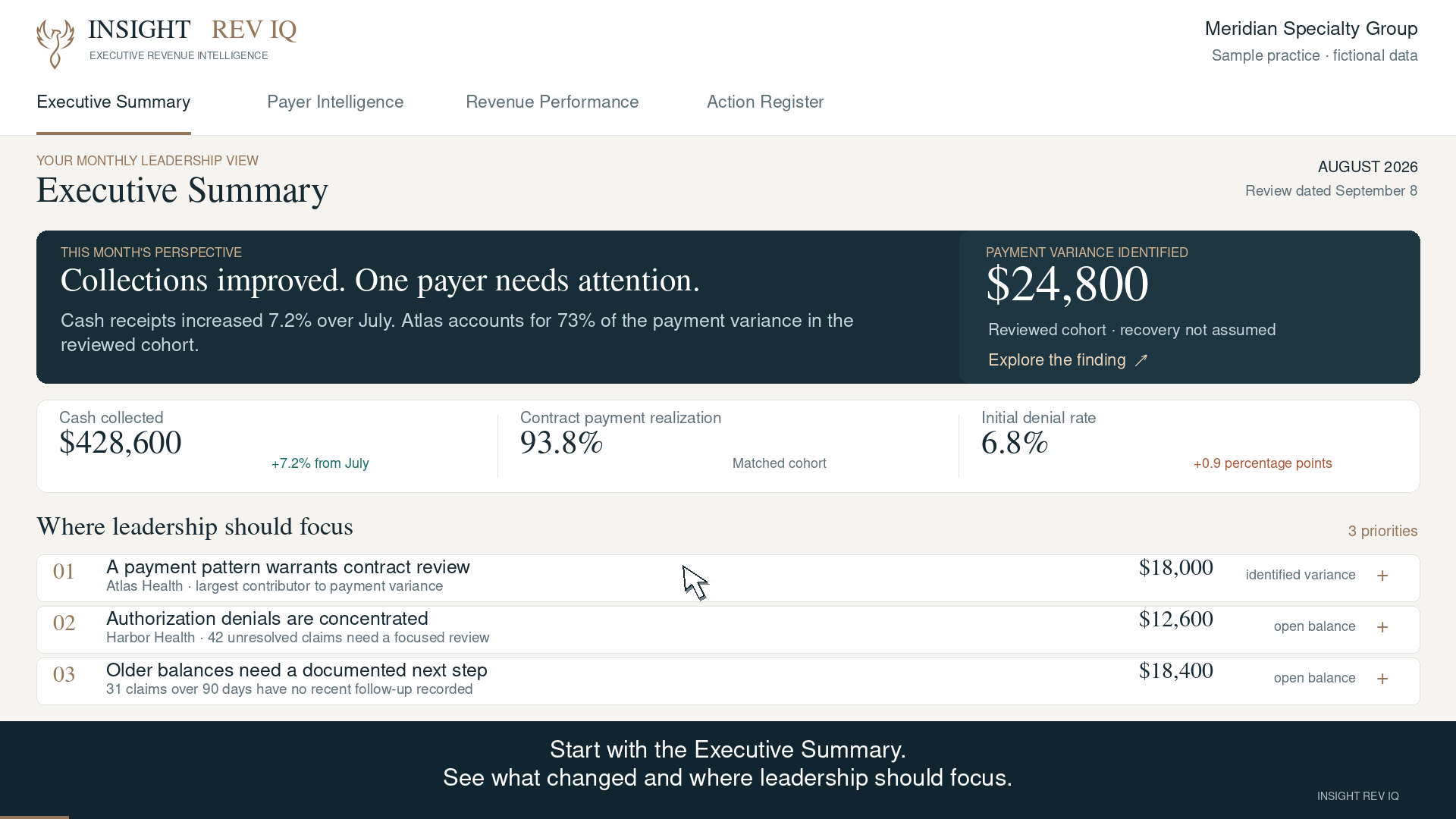
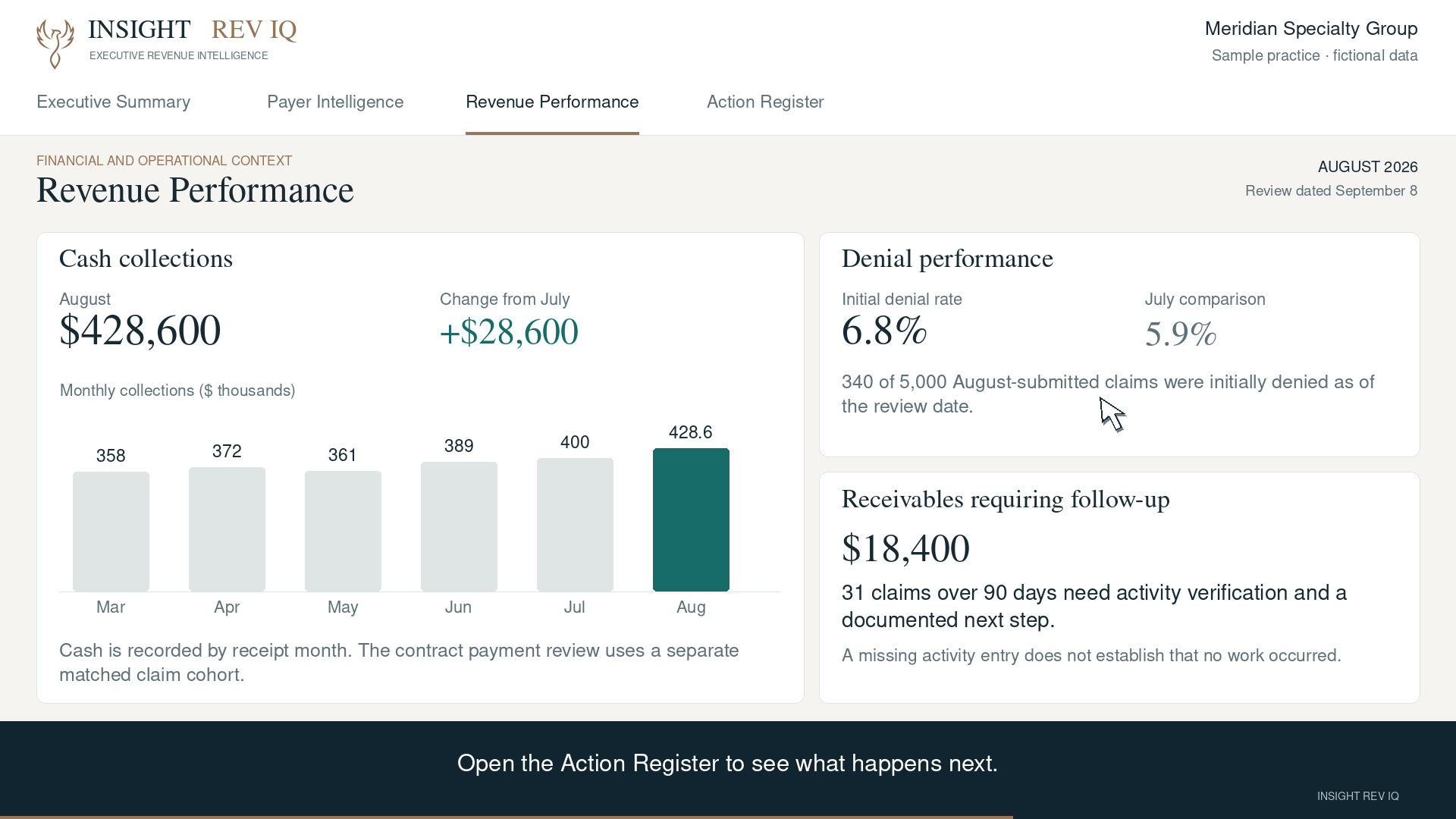
Read this alongside days in AR and the monthly revenue scorecard. Insight Rev IQ's Executive Revenue Intelligence connects these measures to leadership priorities. Begin a Revenue Performance Insight Review when the report needs a clearer explanation and next step.
-min.webp)

.svg)
