
-min.webp)
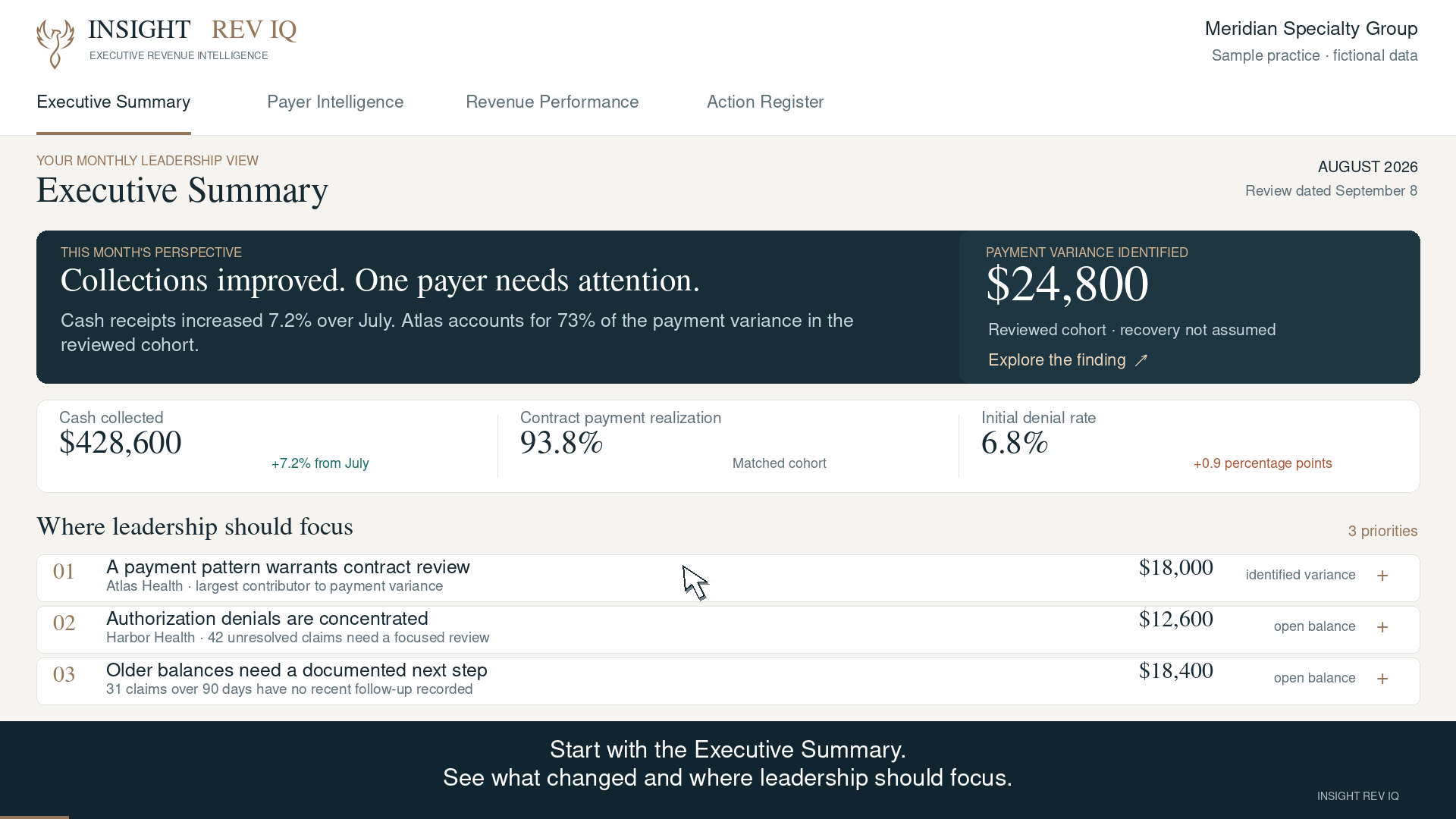
A physician owner should not need to interpret every billing report to understand the practice's revenue performance. The monthly leadership review should explain what changed, why it changed, what remains uncertain, and what the team will do next.
A useful revenue cycle scorecard brings a small set of related measures together. Each measure needs a definition, a comparable trend, and enough supporting detail to make a decision.
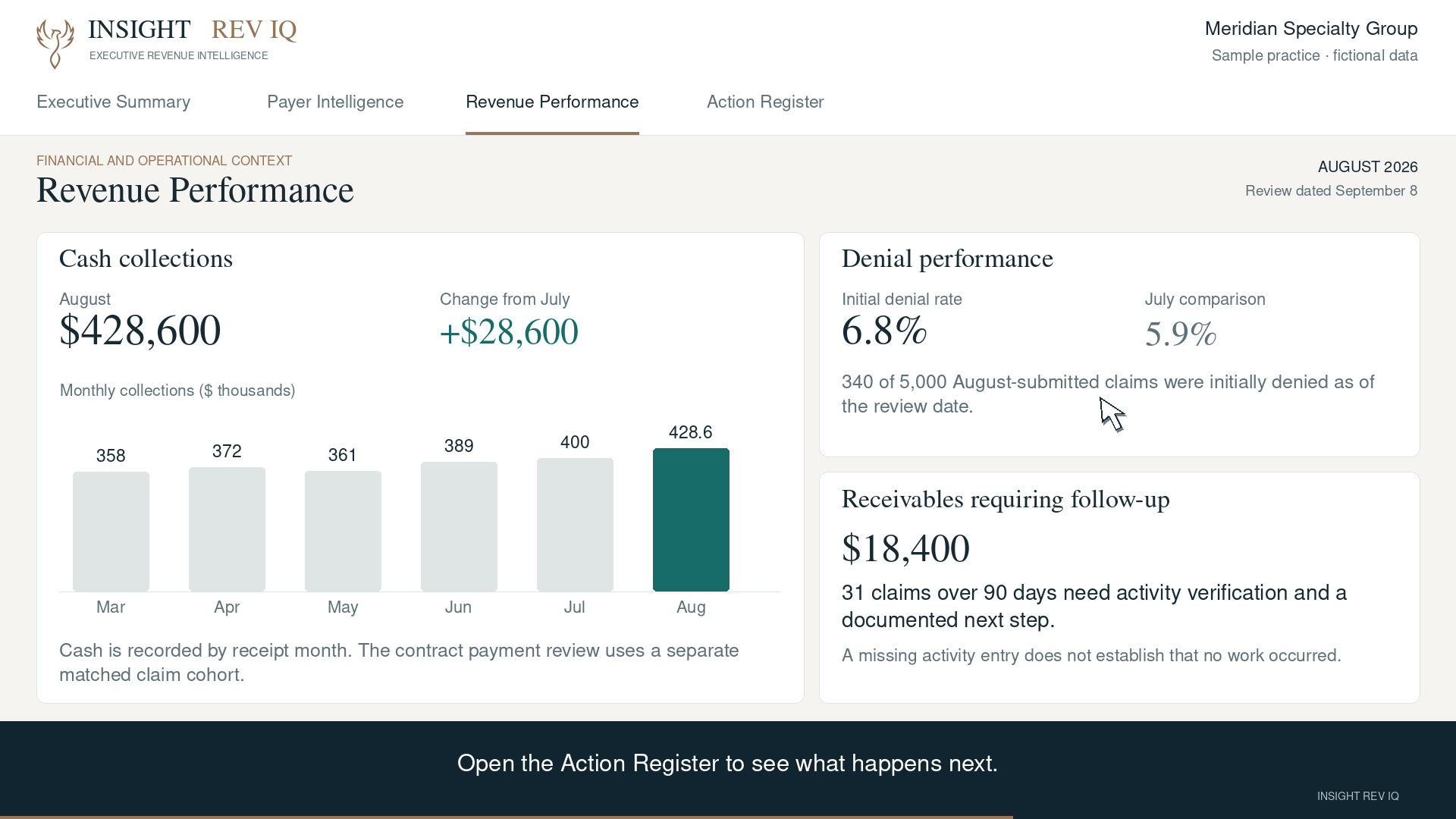
1. Cash collections, with a bridge to the change
Start with cash received and reconciled for the reporting period. Compare it with prior periods and the practice's expectations, then explain material changes using the available evidence.
Consider service volume, payment timing, refunds, payer mix, and unusual receipts. A large payment on an old account can improve this month's cash without demonstrating that the current workflow improved. Conversely, lower cash after a quieter service period may not indicate a collections problem.
The owner should be able to see which parts of the explanation are supported and which still need investigation.
2. Net collection rate, with adjustment definitions
Include net collection rate, but state the dates, adjustment categories, and reporting method. The numerator and denominator need consistent treatment before the percentage can support a comparison.
Ask whether a reported improvement came from more payment or a change in the amount treated as collectible. Keep approved contractual reductions distinguishable from other write-offs. Where timing is material, examine related services and payments together.
3. Days in AR and the older balances behind it
Days in accounts receivable helps put the outstanding balance in context. Pair it with dollars in aging bands and a view of payer and patient responsibility.
The leadership question is not simply whether days increased. It is which balances explain the change, what is delaying resolution, and whether someone owns the next step. Separate payments from write-offs when explaining a decline in receivables.
4. Denials and their eventual outcomes
A clearly defined denial rate helps identify interruptions to payment. Add the largest recurring reason categories and the balances that remain unresolved.
Keep initial denials, subsequent recovery, and final loss distinct. A lower denial rate in a small or changing sample may need context before leadership concludes that a process change worked.
5. Time from service to a usable claim
Review delays between service, charge entry, and accepted claim submission using the dates your systems reliably capture. These intervals identify different parts of the workflow; combine them only when the definition is clear.
Show the distribution or the oldest unresolved exceptions alongside the average. A few long delays can disappear inside an overall average, while a small number of unusual cases can also distort it. Ask which services are delayed and what information is missing.
6. Payment accuracy and payer friction
A paid claim may still warrant review. Use a defined sample to compare supported reimbursement expectations with matched payments, accounting for patient responsibility and other applicable adjustments. Validate potential underpayments before treating them as recoverable revenue.
Also consider the work required to obtain payment. A payer with a favorable contracted rate may create more follow-up, denials, or unresolved balances. A payer report card can place rate, realized payment, timing, and administrative effort side by side.
Make the scorecard usable in a leadership meeting
For each measure, show the reporting period, the current result, comparable prior periods, and a brief explanation. If a data source or definition changed, mark the break in comparability. Do not let a polished chart imply more certainty than the records support.
Use a short written finding such as: “Older balances increased in one payer group. The billing lead is reviewing the affected claims to distinguish documentation delays from payer processing issues. Findings are due at the next review.” This identifies a signal and a next step without presenting an unverified cause as fact.
A useful action register includes:
- The finding and the records supporting it.
- The decision or additional evidence needed.
- The responsible person and due date.
- The status at the next review.
- The confirmed outcome, including whether cash was received.
The scorecard should support the billing team
Metrics identify where to ask better questions. They do not assign responsibility by themselves. Front-desk workflows, provider documentation, technology, payer behavior, and billing follow-up may all affect the same result.
Insight Rev IQ provides fractional revenue leadership and Executive Revenue Intelligence alongside the practice's existing team. The work connects reporting with interpretation, priorities, and action-owner follow-up. Watch the sample executive walkthrough, or start the Revenue Performance Insight Review to identify the questions your practice needs answered.


.svg)
